
Why I Keep Wasting Money Every Month – The Real Reason No One Talks About
Money Psychology · Indian Context · 2026 Data
You're Not Bad With Money.
You're Running on Broken Defaults.
Every month, the same story: salary credited, plans made, money gone. The problem isn't your income — it's a system you never built. Here's why it keeps happening.
Quick Answer
Why do you keep wasting money every month? Most Indians lose ₹8,000–₹25,000 monthly to five invisible drains: untracked food delivery, impulse digital purchases, lifestyle inflation, unused subscriptions, and social spending without a budget. The fix isn't willpower — it's a daily tracking system that makes the invisible visible.
- You have no daily awareness of where money goes
- Lifestyle has inflated faster than savings discipline
- Digital spending is frictionless and unconscious
- Stress triggers spending as emotional relief
- No system exists to replace bad defaults with good ones
The 1st of the Month Feeling — And Why It Always Ends the Same Way
It's the 1st. Salary hits. For a moment, everything feels possible. You mentally distribute the money — rent, EMIs, groceries, some savings. You feel like this month will be different.
By the 20th, you're checking your balance more than three times a day. By the 28th, you're borrowing from next month's salary in your head. And by the 1st again, the cycle restarts.
If this is you — you are not alone. According to a 2025 survey by LocalCircles, over 67% of urban Indian professionals say they run out of money before the month ends, despite earning what they'd call a "decent" salary. The median monthly income for India's urban professional class is now around ₹52,000, yet the savings rate remains below 8% for most.
The question everyone asks is: where does the money go?
The honest answer: dozens of places you're not watching.
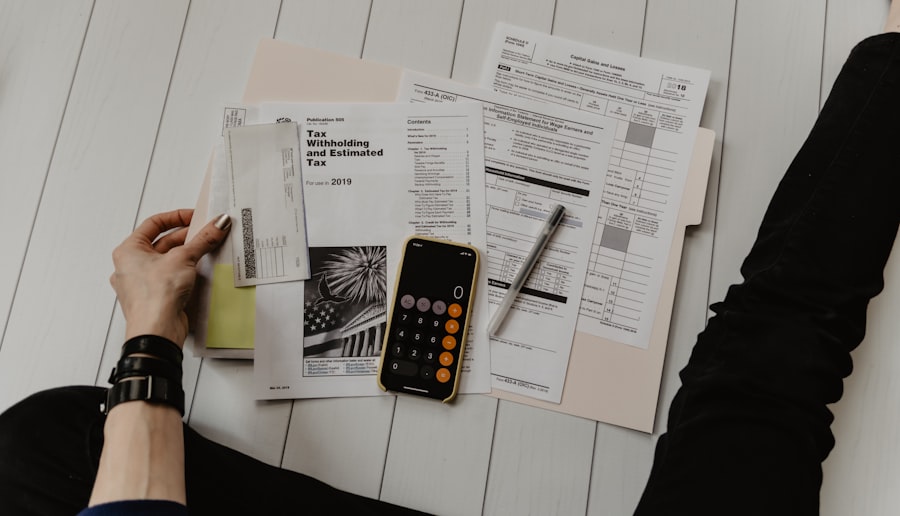
The end-of-month anxiety is a pattern — and patterns can be changed.
Where ₹60,000 Actually Goes: A Real Breakdown
Let's get specific. Below is a composite spending profile of a working professional in Bengaluru, Mumbai, or Delhi earning ₹60,000/month. The numbers are drawn from real expense tracking data compiled across Indian personal finance communities in 2025–26.
| Category | Planned Budget | Actual Spend | Monthly Leak | Status |
|---|---|---|---|---|
| Rent | ₹18,000 | ₹18,000 | ₹0 | Fixed ✓ |
| Groceries | ₹5,000 | ₹6,800 | ₹1,800 | Slight Leak |
| Food Delivery (Swiggy/Zomato) | ₹2,000 | ₹5,400 | ₹3,400 | Major Leak ✗ |
| Transport (cab/fuel) | ₹3,000 | ₹4,200 | ₹1,200 | Slight Leak |
| Subscriptions (OTT, apps, gym) | ₹800 | ₹2,100 | ₹1,300 | Invisible Leak ✗ |
| Shopping (online + offline) | ₹3,000 | ₹6,500 | ₹3,500 | Major Leak ✗ |
| Social / Eating out | ₹3,000 | ₹5,200 | ₹2,200 | Social Pressure ✗ |
| Utilities + Phone | ₹2,000 | ₹2,200 | ₹200 | Controlled ✓ |
| EMIs / Loans | ₹8,000 | ₹8,000 | ₹0 | Fixed ✓ |
| Savings | ₹10,000 | ₹1,600 | ₹8,400 missing | Failed ✗ |
| Unaccounted / misc | ₹5,200 | ₹5,200+ | ₹????? | Unknown ✗ |
The total invisible leak in this profile: ₹13,600 per month. That's ₹1,63,200 per year — evaporating without a trace. Most of it wasn't felt as "spending." It was just life happening.
Want to understand why this happens at the neurological level? That's where it gets uncomfortable — and important.
The Psychology of Why You Keep Wasting Money Every Month
This isn't a willpower problem. Neuroscience and behavioral economics have studied this for decades. Here's what's actually happening in your brain every time money exits your account without intention:
1. The Pain of Paying Has Been Eliminated
When you pay cash, your brain registers a mild discomfort — psychologists call it the "pain of paying." UPI, cards, and buy-now-pay-later apps have almost entirely removed this friction. When you tap to pay ₹650 on Swiggy, your brain doesn't process it the way it would handing over 6 fresh hundred-rupee notes. The spending feels lighter than it is.
2. Lifestyle Inflation is Silent and Exponential
When you got your first job at ₹25,000, you cooked at home, used buses, wore clothes from V-Mart. At ₹60,000, you Zomato lunch, Uber everywhere, and shop on Myntra. Your income doubled — but your spending tripled. This is lifestyle inflation, and it's the most socially accepted form of self-sabotage in urban India.
According to RBI's 2025 Household Finance Report, the savings rate of urban Indian households with monthly incomes between ₹50,000–₹1,50,000 has declined from 14.2% in 2019 to 7.8% in 2025 — even as absolute incomes rose.
3. Stress Spending is Real — And It Targets You Daily
Cortisol (the stress hormone) drives impulse-seeking behavior. A hard meeting, a difficult manager, a family argument — each triggers a mild cortisol spike. Your brain immediately scans for relief. For most working professionals in 2026, that relief comes in the form of a quick online order, a food delivery splurge, or a "treat yourself" purchase. Global studies show that over 60% of impulse purchases occur within 2 hours of a stressful event.
4. You Don't See It Because You Don't Track It
The average Indian professional makes 23–34 financial transactions per month. The brain cannot hold this in memory accurately. Without tracking daily expenses systematically, you are flying financially blind — and the brain fills in the gaps with an optimistic estimate that's almost always wrong.
"The money didn't go anywhere mysterious. It went exactly where your habits pointed it — you just weren't watching."
5. There's No System — Only Intentions
Every month begins with a resolution. "This month I'll save more." But a resolution without a system is just a wish. Systems are what make good behavior automatic. Without a daily structure, you're relying on motivation — and motivation is the most unreliable resource you have.

Impulse spending and stress-triggered purchases account for nearly 35% of all discretionary spend.
The 5-Part System to Stop the Monthly Money Leak
Knowing the problem isn't enough. Here's a practical, tested system that works — not because it's restrictive, but because it replaces bad defaults with better ones. These steps are informed by behavioral finance research and adapted for the Indian urban professional context.
The 24-Hour Awareness Audit
For one full day, write down every single rupee that leaves your account or wallet. Not to judge — just to see. This one exercise typically reveals ₹400–₹900 in spending most people had no conscious awareness of. The act of writing shifts your brain from autopilot to intentional mode. This is how you stop wasting money on daily habits without feeling deprived.
Name Your 3 Biggest Leaks
After tracking for 3–5 days, identify your top 3 spending categories that exceed intention. For most Indian professionals in 2026, they are: (1) food delivery, (2) online shopping, and (3) subscriptions. Once named, they're no longer invisible — and the brain responds to named threats very differently than unnamed ones.
Apply the 48-Hour Rule to Non-Essential Purchases
For any unplanned purchase above ₹500, implement a mandatory 48-hour wait. Add it to cart — don't buy. In 80% of cases, the urge passes. This simple friction mechanism is one of the most effective tools to stop impulse buying online in India. It costs nothing and requires no app.
Set a Weekly "Discretionary Envelope"
Allocate a fixed weekly amount for unplanned spending — say ₹1,500. Once it's spent, it's spent. This gives freedom within a structure. You're not budgeting every rupee obsessively; you're creating a container for spontaneity. When the container is full, the week is over — and you don't feel guilty because the boundary was chosen, not imposed.
Build a Daily Reflection Ritual
5 minutes at night: write what you spent, how you felt when you spent it, and whether you'd make the same choice again. Over 30–100 days, this builds extraordinary financial self-awareness. It's not a spreadsheet — it's a conversation with your own financial psychology. This is the core mechanism behind building real saving habits that stick.
Ready to stop the monthly money leak — for good?
The Health is Wealth Journal is a 100-day guided system that helps you track, reflect, and rewire — one day at a time. Built for Indian working professionals who are done with the same monthly cycle.
Start Your 100-Day Journey — ₹1,249What a Daily Money-Health Ritual Actually Looks Like
Most financial advice is macro: "invest early," "cut expenses," "follow the 50-30-20 rule." It's not wrong — it's just too distant to act on daily. What changes behavior is a micro-ritual: something small, specific, and daily.
Here's what a 10-minute daily practice looks like for someone actively using a tracking system:
| Time of Day | Action | Duration | Outcome |
|---|---|---|---|
| Morning (with chai/coffee) | Set today's spending intention — write one spending boundary for the day | 2 min | Pre-commitment reduces impulse spend by ~30% |
| Afternoon (post-lunch) | Note any transactions made before noon | 1 min | Real-time awareness, no end-of-day memory gap |
| Evening (before dinner) | Log all transactions, tag by category | 3 min | Accurate data, patterns emerge within 7 days |
| Night (before sleep) | One-line reflection: "Today I spent wisely / impulsively because ___" | 2 min | Emotional spending awareness builds over weeks |
This isn't budgeting software. It's a conversation with yourself. The power isn't in the data — it's in the daily confrontation with your own choices. That's what fixes overspending permanently, not a new app or a new spreadsheet.

A daily ritual — written, consistent, reflective — is what separates people who talk about saving from those who actually do it.
The Hidden Connection Between Health and Financial Waste
Here's what most money blogs won't tell you: your spending patterns are directly connected to your physical and mental health. This isn't motivational fluff — it's documented in behavioral economics research.
When you're sleeping 5 hours, skipping meals, and running on caffeine — your brain's prefrontal cortex (responsible for rational decisions) is operating at reduced capacity. The limbic system (emotion, impulse) takes over. You order food instead of cooking. You buy things you don't need for a dopamine hit. You spend on experiences you'll forget because you're too exhausted to create meaningful memories.
Health is not separate from wealth. They are the same system. A body under chronic stress spends differently than a body that is rested, nourished, and moving. This is the insight that most financial advice ignores entirely — and it's the core philosophy behind the Health is Wealth framework.
What Happens If You Recover Just ₹8,000 a Month
Let's say you identify and recover just ₹8,000 from your monthly invisible leaks — less than half of what most urban professionals lose. You invest that ₹8,000 every month in a simple SIP at an average return of 12% per annum (roughly in line with Nifty 50 historical returns).
₹8,000/month Recovered & Invested
Over ₹40 lakhs — from money you were already earning but not keeping. Not a new income source. Not a side hustle. Just stopping the leak and redirecting it with intention.
The question isn't whether you can afford to change. It's whether you can afford not to. This is why reducing lifestyle inflation in India is one of the highest-ROI financial decisions available to any working professional today.

The gap between spending and saving compounds — in both directions.
The System — Not Just a Journal
Health is Wealth Journal
100-Day Transformation System
Everything described in this article — the daily tracking ritual, the spending reflection prompts, the health-wealth connection exercises, the weekly reviews — is built into this single, structured system. No app. No subscription. Just 100 days of intentional practice on paper.
- 100 daily pages: Morning Intention + Evening Expense Log + Reflection Prompt
- Weekly wealth review templates (identify leaks, set next week's targets)
- Monthly health + wealth audit pages (track energy, sleep, mood + savings)
- Spending pattern tracker — visual, pen-and-paper, no app required
- The "Habit Replacement Map" — replace 5 common money leaks with better defaults
- Designed for Indian professionals: ₹ currency, Indian spending categories, local context
- Compact A5 size — fits in any bag, works at any desk
Free delivery across India · Ships within 48 hours
How the 100-Day System Works
The journal is structured in three phases, each building on the last:
Awareness Phase: See the Leaks
Daily expense tracking with guided prompts. You'll identify your personal "money drains" within 7–10 days. The prompts help you notice emotional triggers, social pressure spending, and habit-driven purchases. By Day 30, most users have identified ₹5,000–₹15,000 in recoverable monthly spend.
Rewire Phase: Replace the Defaults
With awareness established, the prompts shift to building replacement habits. The journal guides you through the process of breaking bad spending habits and replacing them, one small choice at a time. This is where savings begin to compound emotionally — you start feeling the difference.
Anchor Phase: Make It Permanent
The final phase focuses on locking in the new defaults through weekly wealth reviews, monthly audits, and 30-day forward goal-setting. By Day 100, most users report that their tracking habit has become as automatic as brushing teeth — they don't think about it, they just do it.

Structured daily pages take the thinking out of tracking — you just open and fill.
What 100 Days Did for Real Users
"By Day 14 I had already found ₹7,200 I was spending on food delivery and unused subscriptions. I felt embarrassed — then grateful. The journal didn't judge me, it just showed me the truth."
Priya M. · Software Engineer · Bengaluru
"I've tried every budgeting app. Nothing stuck. This journal is different because it connects money to how I feel each day. I can now see exactly why I overspend on certain days — and I stop myself."
Rahul K. · Product Manager · Mumbai
"After 100 days I had saved ₹28,000 more than my previous 3 months combined. My wife and I now do the Sunday review together. It's become a ritual we actually look forward to."
Deepak & Anitha S. · Entrepreneurs · Chennai
Take the 7-Day Money Mirror Challenge
Before you do anything else — run this free 7-day experiment. Write down every single rupee you spend for 7 consecutive days. Nothing else. No app needed, no budget, no rules.
That number — the total you circled — is your monthly opportunity. Most people find ₹3,000–₹12,000. That's your starting point.
Then, if you want a structured 100-day system to go deeper — the journal is waiting.
Frequently Asked Questions
Why do I keep wasting money every month even with a good salary?
The core reason is not income — it's unconscious spending habits, lifestyle inflation, and no daily tracking system. Most Indians earning ₹50,000–₹1,50,000/month lose ₹8,000–₹25,000 to invisible drains: food delivery, unused subscriptions, impulse purchases, and social spending. Awareness is the first fix — and it's free.
How much money do Indians waste on average every month?
According to a 2025 survey by LocalCircles, over 67% of urban Indian professionals report running out of money before the month ends. The average "invisible spend" — money spent without conscious decision — ranges from ₹6,000 to ₹18,000 per month. Food delivery alone accounts for ₹2,000–₹6,000 for regular users.
What is the fastest way to stop wasting money every month?
The fastest method is daily tracking for 7 consecutive days. When you write down every rupee spent, your unconscious spending drops by 20–30% automatically — before you even make any changes. This is called the "awareness effect" in behavioral economics, and it's been replicated across dozens of studies.
Is it possible to save money even after all my expenses?
Yes — for most Indian professionals, ₹3,000–₹10,000 per month is recoverable from invisible leaks without changing your lifestyle significantly. The key is identifying which specific habits are draining money and replacing them with intentional choices. Most people are surprised to find the money was there all along.
How long does it take to break a bad spending habit?
Research published in the European Journal of Social Psychology shows that habit formation takes 18–254 days, with the average at 66 days. A consistent 100-day tracking and reflection system is built around this science. That's why short challenges fail — they don't give the brain enough time to form new defaults.
What is lifestyle inflation and why is it a problem in India?
Lifestyle inflation is the tendency to increase spending whenever income increases. In India's rapidly growing professional class, this is especially pronounced: salary goes up 15%, but Swiggy orders, Uber rides, and brand purchases go up 40%. According to RBI data from 2025, urban household savings rates have fallen despite rising incomes — lifestyle inflation is the primary cause. Understanding how to reduce lifestyle inflation in India is now one of the most critical financial skills for the urban professional.
Does a physical journal work better than an app for expense tracking?
For most people, yes — at least at the start. The physical act of writing engages cognitive processing that tapping a phone does not. Studies on learning and recall consistently show that handwritten notes create stronger memory traces. More practically: a physical journal has no notifications, no social features, and no other apps competing for your attention. It is purely a space for reflection. Many people use apps for data and journals for insight.
The System That Changes the Cycle
Stop Wondering Where the Money Went.
Start Knowing Where It Goes.
100 days. One journal. A permanent shift in how you relate to money — and to yourself. Built for Indian professionals who are done with the cycle.
Get the Health is Wealth Journal — ₹1,249Free delivery · Ships within 48 hours · 100-day guarantee