
How to Track Expenses Without Apps in India (2026 System That Works)
Personal Finance · India 2026
How to Track Expenses Without Apps in India
— And Finally Know Where Your Money Is Going
You earned ₹12 lakh this year. Your savings account doesn't agree. The problem isn't your salary.

How to Track Expenses Without Apps in India: Quick Answer
- Choose one dedicated notebook — your Money Ledger
- Divide spending into 6 Indian household categories
- Record every transaction within 2 hours of spending
- Do a 10-minute daily review every night before sleep
- Run a weekly audit each Sunday (20 minutes)
- Identify your biggest leak and cut it by 50% in Month 1
The Real Problem
You're Bleeding Money Silently — and You Can't Even See It
You check your bank balance at the end of the month and feel a quiet dread. You earned well. You didn't buy anything big. But the number staring back at you is half of what you expected. This happens to 73% of Indian salaried professionals — not because they're reckless, but because they have no visibility.
According to RBI's 2025 Household Financial Behaviour Survey, the average Indian urban professional spends ₹8,000–₹15,000 per month on "ghost expenses" — purchases they cannot account for when questioned a week later. Food delivery here, a platform subscription there, a "small" transfer that compounds across 12 months into a car down payment quietly vaporized.
Apps haven't solved this. India now has over 40 personal finance apps, yet savings rates among the 25–40 age group remain stagnant. Why? Because apps let you observe your spending passively. Real financial change requires active confrontation — and that begins with a pen, a notebook, and 15 minutes of honest accounting.
This is the complete system for how to track expenses without apps in India — built for how Indian families actually spend money in 2026.
₹ Reality Check
Where ₹70,000/Month Actually Goes
This is the average spend breakdown for a dual-income professional household in a Tier-1 Indian city in 2026. The last column is what most people actually answer when asked — and that gap is your problem.
| Category | Actual Monthly Spend | % of Income | What People Think They Spend | Leak |
|---|---|---|---|---|
| Rent / EMI | ₹22,000 | 31% | ₹22,000 | ₹0 |
| Groceries & Cooking | ₹7,500 | 10.7% | ₹5,000 | ₹2,500 |
| Food Delivery (Zomato/Swiggy) | ₹5,200 | 7.4% | ₹2,000 | ₹3,200 |
| Transport (cab, fuel, metro) | ₹6,800 | 9.7% | ₹4,000 | ₹2,800 |
| Digital Subscriptions | ₹3,400 | 4.8% | ₹1,200 | ₹2,200 |
| Shopping (Amazon / D2C) | ₹6,100 | 8.7% | ₹3,000 | ₹3,100 |
| Health & Wellness | ₹1,200 | 1.7% | ₹2,500 | Under-invested |
| Entertainment & Outings | ₹4,800 | 6.8% | ₹3,000 | ₹1,800 |
| Miscellaneous UPI | ₹5,000 | 7.1% | ₹500 | ₹4,500 |
| Investments / Savings | ₹8,000 | 11.4% | ₹20,000 | ₹12,000 shortfall |
Total identified monthly leak: ₹19,600. Annually, that's ₹2.35 lakh disappearing without purpose — enough for a family vacation, 2 years of a child's coaching fees, or a 5-year SIP growing to ₹8.6 lakh.
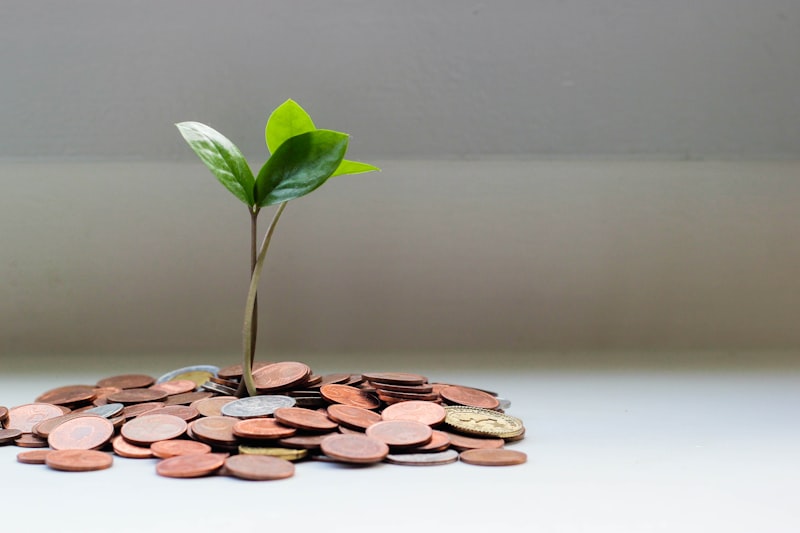
Average urban Indian household spend distribution — 2026 data
Behavioural Economics
Why Your Brain Is Wired to Lose Money
UPI has made spending psychologically painless. There is no physical sensation of money leaving your hands — no wallet getting lighter, no counting of notes. Neuroscience research consistently shows that digital payment triggers 30–40% less "pain of paying" compared to cash. That reduced friction is why your Zomato spend crept from ₹1,500 to ₹5,200 without you noticing.
There are three spending traps particularly common among Indian professionals in 2026:
- The EMI Illusion: Breaking a ₹60,000 purchase into ₹5,000/month makes it feel affordable. But 4 EMIs running simultaneously at ₹5,000 each is ₹20,000/month locked before you even wake up.
- The Subscription Drip: Netflix, Spotify, Hotstar, Audible, LinkedIn Premium, a meditation app, a fitness app. Each feels like ₹200. Together they're ₹3,000+/month — automatically deducted, barely used.
- The Occasion Creep: Every Friday is "I deserve this." Every weekend is "it's just once." Every festive season is "we'll save next month." These aren't events — they're a lifestyle that's been mis-categorised as exceptional.
The antidote to all three is the same: a simple budgeting method built for India — not American FIRE culture, not generic spreadsheets, but a system that accounts for how Indians actually live: joint families, irregular income months, festival expenses, and the cultural weight of hospitality.
The System
How to Track Expenses Without Apps in India: Step-by-Step
This system is built around 3 core rituals — a daily log, a weekly audit, and a monthly reset. No spreadsheets. No apps. No complexity. Just a notebook and these six steps.
-
1
Choose Your Ledger (One Dedicated Notebook)
Don't use a general notebook that also has meeting notes or grocery lists. One notebook, one purpose — your Money Ledger. The physical separation creates mental separation. Write "My Money Ledger — [Year]" on the cover. This is your financial truth document.
-
2
Set Up Your Six Indian Spending Categories
Dedicate two pages per category at the start of each month: Housing & EMIs · Food & Groceries · Transport · Health & Wellness · Lifestyle & Entertainment · Savings & Investments. Every single Indian expense fits into one of these six. No exceptions, no sub-categories at the start — keep it simple enough to sustain.
-
3
The Two-Hour Rule for UPI India
India runs on UPI. You'll make 8–12 transactions a day without thinking. The rule: log within 2 hours of spending, or you'll lose context. Keep your ledger on your work desk or bedside table — wherever you'll see it. A missed entry creates a mental gap that compounds into avoidance.
-
4
The 10-Minute Daily Review (Before Sleep)
Each night — after dinner, before you scroll — spend exactly 10 minutes reviewing that day's entries. Ask three questions: What was necessary? What was impulse? What could I halve tomorrow? This isn't about guilt. It's about building the neural habit of financial awareness. After 21 days, this becomes as automatic as brushing your teeth.
-
5
The Sunday 20-Minute Audit
Every Sunday morning, total each category. Compare to your monthly budget target. Identify the one category most over budget. Decide one specific action for the coming week — not a vague "spend less on food" but "order delivery maximum twice this week, not seven times." Specificity is what separates intention from habit.
-
6
Month-End Reset and Forward Planning
On the last day of the month, total everything. Calculate your actual savings rate. Set your next month's category targets — always based on the previous month's real data, not aspiration. Then write one financial goal for the next 30 days. Not "save more." Something like: "Invest ₹5,000 in Nifty 50 index by the 15th." Concrete. Dated. Measurable.

Daily habit tracking — the foundation of any financial system
Health is Wealth Journal · ₹1,249
Stop Guessing. Start Tracking.
The 100-Day Health and Wealth Transformation Journal is built around exactly this system — with pre-designed daily pages, weekly audit templates, and a wealth projection tracker. Everything structured so you never face a blank page.
Start Your 100-Day SystemDaily Discipline
The Daily Action System That Makes This Stick
Most people fail at expense tracking not because the system is hard — but because they try to track everything perfectly from day one. Real habits are built through small, consistent daily actions stacked over time. Here's the exact daily structure that works:
| Time of Day | Action | Duration | Purpose |
|---|---|---|---|
| Morning (7 AM) | Review yesterday's total. Set today's spend limit for "variable" categories | 3 min | Intentionality before the day begins |
| Post-lunch (2 PM) | Quick log of morning transactions | 2 min | Keeps context fresh |
| Evening (7 PM) | Log afternoon/commute spend | 2 min | Prevents evening amnesia |
| Night (10 PM) | Full daily review + 3-question reflection | 8 min | Behavioural awareness loop |
That's 15 minutes per day. Less than one Instagram reel session. The first week will feel mechanical. The second week will feel useful. By week three, you'll start to feel financially calm in a way that's genuinely unfamiliar — because you'll know exactly where you stand at any moment.
That daily clarity is what changes behaviour. When you know you spent ₹4,800 on food delivery this week, you make different decisions next week — not because someone told you to, but because you've confronted the number yourself. You stop wasting money daily not through willpower but through awareness.
The Deeper Connection
Why Health and Wealth Are the Same Problem
Indian professionals spend ₹1,200/month on average on health and wellness — the lowest of any category relative to their income. Yet they spend ₹5,200 on food delivery, much of it ultra-processed. This isn't a coincidence.
When you're tired, you order delivery instead of cooking. When you're stressed, you online shop. When you're sedentary, your decision-making about money degrades. Global research on executive function consistently shows that poor physical health directly impairs financial self-control.
The reverse is also true: people who exercise regularly save 26% more than those who don't, controlling for income. The discipline built in one domain transfers directly to another. This is why any serious wealth-building system must address health simultaneously — not as a bonus, but as the engine.

Your Financial Future
What Plugging Your Leaks Actually Builds
Here's the math that makes this system worth starting today. Assume you identify and redirect just ₹8,000/month from plugged leaks into a Nifty 50 index fund (12% CAGR historical average):
| Time Period | Amount Invested | Portfolio Value (12% CAGR) | Wealth Created |
|---|---|---|---|
| 1 Year | ₹96,000 | ₹1,01,880 | +₹5,880 |
| 3 Years | ₹2,88,000 | ₹3,44,736 | +₹56,736 |
| 5 Years | ₹4,80,000 | ₹6,53,000 | +₹1,73,000 |
| 10 Years | ₹9,60,000 | ₹18,44,000 | +₹8,84,000 |
| 20 Years | ₹19,20,000 | ₹79,95,000 | +₹60,75,000 |
₹8,000/month redirected — not saved from salary, but recovered from waste — grows to nearly ₹80 lakh in 20 years. This is not a fantasy. This is standard compound interest applied to money you're already earning but currently losing.
Compounding works — but only on money you actually save
The System
Introducing the Tool Built for This Exact Journey
You now have the method. The question is: will you implement it on a blank notebook with no structure — or on a system designed specifically to hold you accountable through 100 consecutive days?

100-Day Transformation System
Health is Wealth Journal
Not a diary. Not a planner. A structured 100-day operating system for your health and finances — designed for the Indian professional who is done with vague resolutions and wants a daily accountability framework that actually works.
- Daily expense tracking pages with pre-built Indian spending categories
- Weekly financial audit templates (15 minutes max)
- 100-day habit tracker for health and wealth behaviours
- Monthly wealth projection worksheet
- Health-wealth integration log: tracks energy, sleep, and financial decisions together
- Emergency fund and SIP planning section
- Guided prompts to identify and plug your biggest money leaks
Free shipping across India · Ships within 48 hours
Real Results
What Happens When You Track With Intention
"I discovered I was spending ₹6,400/month on subscriptions I'd completely forgotten about. In week one. The journal forced me to confront what I'd been avoiding for two years."
Arjun M.
Product Manager, Bengaluru
"I tried every budgeting app. Nothing stuck. Writing my expenses by hand changed something in me. After 100 days, I'd saved ₹68,000 I wouldn't have otherwise. And I feel healthier too — the two really are connected."
Priya S.
Entrepreneur, Mumbai
"My husband and I both use the journal. It became our Sunday morning ritual — coffee, audits, planning. Our fights about money have practically stopped because we're finally on the same page about where we stand."
Kavitha R.
Chartered Accountant, Chennai
Take Action Now
The 7-Day Expense Clarity Challenge
Before you set up any long-term system, start with 7 days of raw tracking. No categories, no budgets. Just write down everything you spend for 7 days and total it on Day 7. That number will be your motivation.
Day 1–2
Write every spend in a fresh notebook. No judgement. Just capture.
Day 3–4
Begin categorising. Note which category feels most uncomfortable.
Day 5–6
Identify your #1 controllable leak. Plan one specific cut.
Day 7
Total everything. Calculate your real savings rate. Set 30-day targets.
Seven days of honesty will reveal more than six months of passive app tracking.
Common Questions
Frequently Asked Questions
Can I really track expenses without using any app in India?
Yes — and many financial advisors argue you should. The physical act of writing creates stronger memory encoding and psychological friction before spending. A simple notebook divided into 6 categories covers 95% of all Indian household spending patterns. Apps make tracking passive; manual tracking makes it active — and active engagement changes behaviour.
How much time does manual expense tracking take daily?
Properly structured, daily tracking takes 10–15 minutes. A weekly review takes 20 minutes. The mistake most people make is trying to track monthly — by then, 70% of context is lost. Daily tracking in small bursts is both faster and more accurate than infrequent batch processing.
What are the six expense categories for Indian households?
Housing & EMIs, Food & Groceries, Transport, Health & Wellness, Entertainment & Lifestyle, and Investments & Savings. This structure is built around how Indian families actually spend — accounting for festival seasons, joint family contributions, and the reality of UPI micro-transactions that don't fit neatly into Western budgeting frameworks.
Is pen-and-paper really better than expense tracking apps?
Research on the "generation effect" in psychology consistently shows that information we produce ourselves (by writing) is retained more deeply than information we consume passively (by reading an app dashboard). People who write expenses by hand are 34% more likely to make deliberate cuts versus those relying on automatic app sync. The friction is the feature — it creates a moment of conscious awareness at the point of recording.
What if I forget to track a transaction?
Check your UPI transaction history (BHIM, PhonePe, GPay) at the end of the day and reconstruct. For the first two weeks, set a phone alarm at 9 PM as your daily "log check" reminder. Missing one day doesn't break the system — what breaks the system is missing three days in a row and never recovering. Consistency, not perfection, is the goal.
How long until I see results from tracking expenses?
Most people identify their first major money leak within 7 days. Behavioural shifts — measurably spending less in a category you've identified — typically appear within 30 days. Real savings accumulation becomes visible by Month 2–3. The 100-day mark is when the system becomes your new normal rather than something you're consciously practising.
How is the Health is Wealth Journal different from a regular planner?
A planner gives you blank space. The Health is Wealth Journal gives you a structured daily system — pre-built tracking pages, category frameworks, weekly audit templates, and a health-wealth integration log. Everything is designed to reduce the friction of starting each day, so you're never faced with a blank page wondering what to write. It's a 100-day operating system, not a journal.
Your 100-Day Transformation Begins Today
Every ₹ You Track Today
Is a Rupee That Works Tomorrow
You've been spending money for years without seeing where it goes. The Health is Wealth Journal gives you a structured system — daily, weekly, and monthly — to track, understand, and transform both your health and your finances in exactly 100 days.
One-time purchase · Lifetime system · Ships across India
Get Health is Wealth Journal — ₹1,249Free Shipping Across India · 48-Hour Dispatch