
How to Track Expenses When Salary Is Low | Beat Every Rupee Leak
Personal Finance · India 2026
Your Salary Isn't the Problem.
The Leaks Are.
How to track expenses when salary is low — a no-nonsense Indian framework that finds ₹3,000–₹6,000 hiding in your own spending, every single month.
Quick Answer — Featured Snippet
How to track expenses when salary is low: Use the 4-Bucket Method — divide every rupee into Needs, Wants, Waste, and Wealth the moment you spend it. Record in a notebook every evening. Review on Sundays. Cut one leak per week. Most people on ₹20,000–₹45,000/month find ₹3,000–₹7,000 in unnecessary spending within 10 days.
- Write down every expense the same day — no exceptions
- Label it N (Need), W (Want), X (Waste), or S (Save)
- Total each bucket every Sunday evening
- Identify your single biggest Waste category
- Cut it by 50% in week two and redirect to savings
The Real Problem
It's the 15th. Your salary account shows ₹4,200. You have 15 days left.
If this is familiar, you're not bad with money. You're simply running a leaking pipe — and nobody ever showed you where the holes are.
According to RBI's 2025 Household Financial Survey, over 63% of urban Indians earning under ₹50,000/month report running out of money before the month ends. The median shortfall? ₹6,400 per month. That's not a salary problem. That's a visibility problem.
You can't fix what you can't see. And right now, your money is invisible to you the moment it leaves your account.
The good news: you don't need a raise. You need a system. And this guide gives you one — built for the Indian context, built for tight budgets, and built to work without any app, subscription, or spreadsheet.
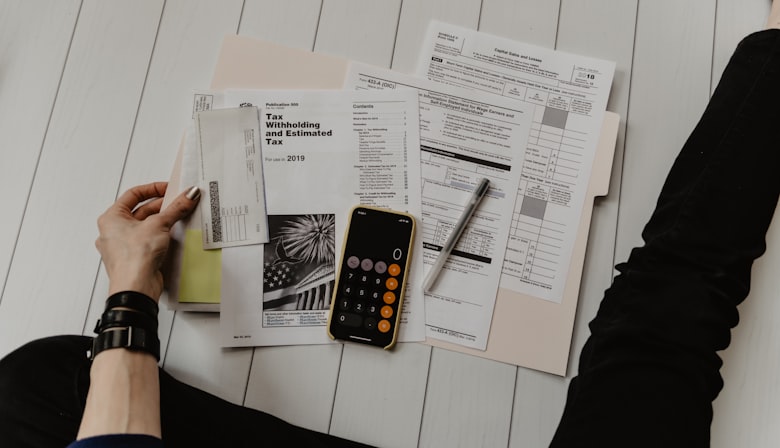
Most salaried Indians spend 40–50% of income on invisible or unconscious purchases — not large bills.
Before we get into the system, let's understand what's actually happening to your money. Why tracking daily expenses is important in India — it's not just discipline, it's financial survival in a country where inflation runs 5–6% annually while salary hikes average 8–9% on paper.
₹ Reality Breakdown
Where a ₹30,000 Salary Actually Goes (India, 2026)
This is the average monthly spend pattern of a single working professional in a Tier-1 or Tier-2 Indian city. See where you fit.
| Category | Avg. Monthly Spend | % of Salary | Fixable? |
|---|---|---|---|
| Rent (1BHK shared) | ₹7,000–₹12,000 | 23–40% | Low (fixed) |
| Food — home + office | ₹3,500–₹5,500 | 12–18% | Medium |
| Food delivery (Swiggy/Zomato) | ₹1,800–₹3,500 | 6–12% | HIGH — top leak |
| Commute | ₹800–₹2,200 | 3–7% | Low |
| Subscriptions (OTT, music, apps) | ₹600–₹1,400 | 2–5% | HIGH — forgotten money |
| Impulse online shopping | ₹1,200–₹3,000 | 4–10% | HIGH — emotional spending |
| Utilities + phone | ₹700–₹1,200 | 2–4% | Low |
| Weekend outings + chai/snacks | ₹1,500–₹3,000 | 5–10% | MEDIUM — fixable by 50% |
| EMIs (if any) | ₹0–₹4,000 | 0–13% | Varies |
| Savings (actual) | ₹0–₹1,500 | 0–5% | Should be 15–20% |
The red rows alone account for ₹5,100–₹10,900 per month — money that leaves your account without giving you any meaningful return in quality of life. That's not a value judgement. That's a math problem.
Why This Happens
The Psychology of Low-Salary Spending
Here's what nobody tells you about being on a tight budget: scarcity makes spending worse, not better.
Global behavioural economists Mullainathan and Shafir (authors of Scarcity) found that people under financial stress consistently make poorer spending decisions — not because they lack knowledge, but because mental bandwidth is limited. When you're worried about rent, your brain doesn't have room to evaluate whether that ₹299 Zomato order is wise.
This creates a vicious loop:
- Stress from low salary → emotional spending to feel better
- Emotional spending → money runs out faster
- Money running out → more stress
- More stress → reduced willpower → more spending
"The poor are not poor because they make bad decisions. They make bad decisions because they are poor — and because no one gave them a system."
The exit from this loop isn't willpower. It's structure. A system that removes decisions — so you don't have to rely on mental bandwidth that scarcity has already depleted.
This is precisely why the habit of tracking expenses daily works better than any budgeting app. Apps require active choice. A structured daily habit becomes automatic — and automatic is the only thing that survives a stressful month.

Intentional spenders don't earn more — they see more. Visibility changes behaviour automatically.
The System
How to Track Expenses When Salary Is Low: The 4-Bucket Method
This system was built for Indian working professionals earning ₹18,000–₹55,000/month. It requires a ₹20 pocket notebook, 5 minutes a day, and zero apps. Learn more about how to track expenses without apps in India.
-
1
Set Up Your Notebook in 10 Minutes
Label four columns at the top of every page: N (Need), W (Want), X (Waste), S (Save/Invest). Write the date at the top. That's your daily page. On the first page of each month, write your net salary and list your fixed expenses (rent, EMI, subscriptions). This is your ceiling. Everything else is discretionary.
-
2
Record Every Rupee — Same Day, Every Day
At every point of spending — UPI payment, cash, card — open your notebook and log it. Category + amount. Don't wait till evening. The longer you wait, the more you forget. The goal is not perfection. The goal is visibility. Even if you miss ₹200 here and there, within 10 days you'll see your real spending pattern with startling clarity. This is the core of tracking daily expenses manually, step by step.
-
3
The Sunday Review (15 Minutes)
Every Sunday evening, total your 7 days. Which bucket is bleeding? Food delivery? Snacks? Online shopping? You don't need to shame yourself — just circle the one biggest leak. Set a 50% reduction goal for that one category next week. Only one. Trying to fix everything at once is how people quit.
-
4
Automate Your Savings on the 1st
Whatever your Sunday review reveals as savings potential — even ₹500 — set a standing instruction on your bank app to auto-transfer it to a separate savings or RD account on the 1st of every month. Pay yourself first. What stays in your main account gets spent. What leaves on Day 1 gets saved. No discipline required.
-
5
The Monthly Salary Allocation (First Hour of the Month)
The moment your salary lands, sit down for 60 minutes. Allocate on paper: Fixed Costs first (rent, EMI, utilities). Then a set savings amount. Whatever remains is your discretionary pool. Divide it by the number of days left in the month. That's your daily spend budget. Write it in your notebook. Every morning, you start the day knowing the number.

A habit tracker beside your expense log increases consistency by 3x — the visual chain effect is real.
Quick Thought
"The system above works. But if you need 100 days of guided prompts, daily reflection questions, and a built-in wealth tracker — that's exactly what the Health is Wealth Journal is designed for."
Daily Rhythm
The 10-Minute Daily Action System
Most budgeting advice fails because it requires 30–60 minutes of "financial planning" per week. Nobody has that on a stressful day. Here's a daily rhythm that takes under 10 minutes:
MORNING · 2 MIN
Check your daily spend budget. Remind yourself of the number. Set an intention for where your money goes today.
REAL-TIME · 1 MIN
Every time you pay — UPI, cash, card — open notebook. Write amount + category. Done. Close notebook.
NIGHT · 5 MIN
Total today's spend. Write it at the bottom of the page. Write one sentence: "I felt [emotion] when I spent on [thing]." This builds awareness.
That emotion sentence is not optional. Research from the University of Cambridge's Wellbeing Institute (2024) shows that linking spending to emotional states — even briefly — reduces impulse purchases by up to 31% over a 30-day period. You're training your brain, not just your budget.
The Hidden Connection
Why Financial Stress Destroys Your Health — and Vice Versa
Here's what most budgeting content misses: health and wealth are the same problem.
When you're financially stressed, cortisol levels rise. Chronic cortisol elevation increases cravings for high-calorie, low-nutrition food — the kind that comes from Swiggy at 11 PM. It reduces sleep quality. It lowers your motivation to exercise. And it significantly impairs decision-making — the exact faculty you need to manage money well.
Meanwhile, poor health creates direct financial costs: doctor visits, medicines, sick days, reduced productivity, and lower career growth. The World Health Organisation estimates that poor health reduces an individual's productivity by 15–25% over a lifetime — translating to 15–25% lower lifetime earnings.
Solving one accelerates the other. Better sleep → clearer financial decisions. Less stress → reduced emotional spending. More energy → higher performance at work → faster income growth. This is the Health–Wealth feedback loop, and it's why any serious money transformation must also address the physical.

The people who transform their finances almost always transform their health first — or simultaneously.
The Numbers
What Happens If You Actually Track and Save ₹3,000/Month?
Let's be conservative. Say you implement this system and find only ₹3,000 per month in savings — about half of what most people find. Here's what that looks like over time, assuming a basic 6% RD interest rate:
₹1.18 lakh in 3 years from ₹3,000/month. That's a security deposit. That's a business fund. That's a flight to somewhere you've dreamed of. That's the difference between scarcity and option.
And most people who implement this system properly find ₹5,000–₹8,000/month. The math scales accordingly.
Want to understand how to track daily expenses and save money consistently? It starts with the first 10 days — where you see, for the first time, exactly where everything went.
The Tool
Why Most People Fail the DIY Approach — and What Actually Works
The system above is real and it works. But here's the honest truth: most people set it up and abandon it by Day 12.
Not because they're undisciplined. Because a blank notebook doesn't ask you questions. It doesn't prompt reflection. It doesn't track your health alongside your wealth. It doesn't show you your 100-day arc.
That's why we built the Health is Wealth Journal — a 100-day physical transformation system that integrates daily expense tracking, health habit logging, and guided reflection prompts into a single structured daily practice.
- Daily expense tracker with the 4-Bucket method pre-printed — no setup needed
- Morning intention + evening reflection prompts (2 min each)
- Weekly Sunday Review template built in
- Monthly Wealth Snapshot pages — see your growth visually
- Health tracking: sleep, water, movement, energy — because they drive financial behaviour
- 100-day habit chain — the visual streak that keeps you going
- Guided prompts rooted in behavioural finance and habit science

The Health is Wealth Journal — 100 days of structured daily tracking for both health and wealth.
100-Day Transformation System
Health is Wealth Journal
The only daily planner that tracks your spending, your health habits, and your mindset in one place — built for Indian working professionals who are done with financial chaos.
FREE SHIPPING · LIMITED STOCK · PHYSICAL JOURNAL
Start Your 100 Days →Real Results
What Happens After 30 Days of Actual Tracking
"I was earning ₹28,000 and had ₹0 savings. After 30 days with the journal, I found ₹5,400 in monthly leaks I didn't know existed. Month 2 I saved ₹4,800."
ARJUN K. · PUNE · SOFTWARE SUPPORT
"The health + money tracking combination is what makes this different. When I slept better, I stopped stress-ordering Zomato. That alone saved ₹3,000/month."
PRIYA M. · BENGALURU · HR EXECUTIVE
"I tried 4 apps before this. None lasted 2 weeks. The physical journal sits on my desk and I can't ignore it. I've tracked every day for 67 days straight."
RAHUL S. · DELHI · FREELANCER
7-DAY CHALLENGE
The "Find Your ₹5,000" Challenge
Try this before you buy anything. For the next 7 days, track every rupee you spend using this exact method. At the end of Day 7, add up everything in the X (Waste) column.
- Get a small notebook today (₹20 at any stationery shop)
- Write today's date and your daily spend limit (monthly discretionary ÷ 30)
- Log every single purchase — UPI, cash, card
- Label each one: N, W, X, or S
- At end of Day 7, total the X column
- That number is your monthly leak × 4
- Screenshot it and remember it
Most people who do this challenge find ₹1,200–₹2,500 in pure waste in one week. At the end of 7 days, you'll know exactly why you need a system — and you'll have the data to prove it.
Going Deeper
The Simple Budgeting Method That Works for Every Salary Level
Once you've tracked for 30 days, you graduate to structured budgeting. The most effective method for Indian salaried professionals is a modified version of the envelope system — one we call the 3-Pot Method.
On salary day, mentally divide your take-home into three pots:
- Pot 1 — Committed (50–55%): Rent, EMI, utilities, groceries, commute. Fixed, non-negotiable.
- Pot 2 — Lifestyle (25–30%): Food delivery, entertainment, dining out, shopping. You can spend freely within this pot — no guilt.
- Pot 3 — Future (15–20%): Transferred out on Day 1, before you can spend it. RD, SIP, emergency fund.
The magic is in Pot 3 leaving before your fingers touch it. Read more about the simple method to track daily spending habits that makes Pot 2 feel like freedom, not restriction.
When your salary is low, start with Pot 3 at just 5–10%. The habit is more important than the amount. As you cut leaks and find savings, increase Pot 3 by 1% every month. In 12 months you'll be saving 15–20% without feeling it.
The most critical mindset shift: stop trying to stop wasting money daily through willpower. Design your system so waste becomes structurally difficult. When you automatically transfer savings on Day 1, you can't accidentally spend them.
Frequently Asked
Questions About Tracking Expenses on a Low Salary
How can I track expenses when my salary is very low?
Start with a pocket notebook and the 4-Bucket Method (Needs, Wants, Waste, Wealth). Record every expense the same day you make it. Review every Sunday. Within 10 days you'll see clear spending patterns and find your first set of leaks. No app required.
What is the best way to save money on a low income in India?
The 50-30-20 rule adapted for India: 50% on needs (rent, food, travel), 30% on lifestyle, and 20% on savings. When salary is low, start by saving ₹500–₹1,000/month and build the habit. The consistency matters more than the amount in the first 3 months.
Can I track expenses without a mobile app?
Yes — and for many people, a physical notebook works better. Apps get ignored after 3–5 days. A journal on your desk demands attention. The physical act of writing also creates stronger memory encoding, which builds spending awareness faster.
How much should I save if I earn ₹25,000 per month?
On ₹25,000/month, aim to save ₹2,500–₹4,000 (10–15%). Start with ₹1,000 if that feels easier. Track ruthlessly, cut one leak per week. By month 3, most people find they can save 20%+ without lifestyle disruption.
Why do I always run out of money before the month ends?
Most people have 3–6 invisible leaks: food delivery, forgotten subscriptions, impulse shopping, and convenience spending. Tracking daily for 7 days exposes all of them. The leaks are almost never rent or groceries — they're the small daily spends that feel insignificant individually.
Is the Health is Wealth Journal only for people with money problems?
No. It's designed for anyone who wants to build intentional habits around both health and wealth — whether you're earning ₹20,000 or ₹2,00,000/month. The system scales to any income level. The focus is on building systems and visibility, not fixing poverty.
What makes the Health is Wealth Journal different from a regular diary?
A regular diary is blank — it requires you to create structure yourself, which most people don't do consistently. The Health is Wealth Journal has pre-structured daily pages with built-in prompts, expense tracking columns, health habit logs, and monthly review templates. The structure is done for you. You just show up.
Begin Your Transformation
100 Days From Now, You'll Either Have a System — or the Same Leaks.
The Health is Wealth Journal gives you the daily structure to track expenses, build health habits, and see real wealth accumulation — for less than a single evening of impulse spending.
ONE-TIME · PHYSICAL JOURNAL · FREE SHIPPING
Get the Journal — Start Day 1 TodaySecure checkout · COD available · Ships within 48 hours