
How to Track Expenses Using a Notebook Effectively | Health is Wealth Journal
You're Not Broke.
You're Just Not Watching.
Most Indians track their salary to the rupee — and have zero idea where it goes. Here's the notebook system that changes that.
Quick Answer
How to Track Expenses Using a Notebook Effectively
- Set up a 4-column layout: Date | Expense | Category | Amount (₹)
- Record every expense within 2 hours of spending — no exceptions
- Use 6–8 fixed categories (Food, Transport, EMI, Utilities, Health, Entertainment, Misc)
- Do a 5-minute nightly review — total the day, flag overspends
- Do a weekly audit every Sunday — identify your top 3 money leaks
- Set a monthly savings target on page 1 and measure against it
The ₹14,000 You Can't Account For
A 2025 survey of Indian urban professionals found that the average salaried employee in metro cities could not account for 22–28% of their monthly income when asked to recall their spending. That's not a rounding error — on a ₹60,000 salary, that's over ₹14,000 vanishing silently every single month.
It's not Zomato. It's not Blinkit. It's not even the coffee.
It's the accumulated weight of hundreds of tiny, untracked decisions — each one invisible by itself, catastrophic in aggregate. The ₹320 auto because you were late. The ₹180 snack because the office meeting ran long. The ₹2,400 impulse buy on a Tuesday because you were stressed.
You didn't waste money. You just never watched where it went.
And the tragedy? Awareness alone changes behaviour. Studies on financial psychology consistently show that people who track expenses — by any method — spend 15–23% less within 60 days, without any other change to their income or lifestyle. You don't need a raise. You need a notebook.
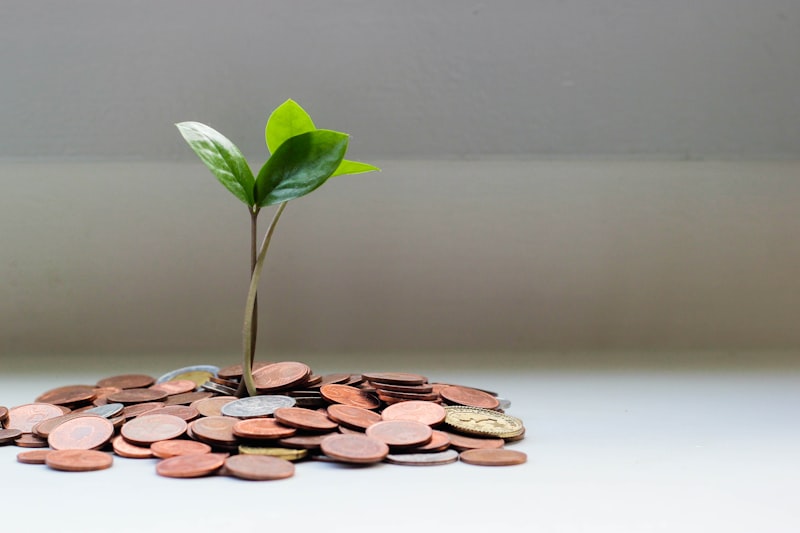
Most urban Indians lose ₹10,000–₹18,000/month to untracked, impulsive spending.
This guide will show you exactly how to track expenses using a notebook effectively — not the generic "write it down" advice you've ignored before, but a precise, field-tested system built for Indian working life.
Also worth reading: why tracking daily expenses is important in India — the psychology behind why most people quit too soon.
The Honest ₹ Breakdown: Where a ₹70,000 Salary Really Goes
Before building your system, you need to see the problem clearly. Below is a composite picture built from expense data of Indian professionals in Bengaluru, Mumbai, Hyderabad, and Delhi in 2025–26. The numbers will feel familiar.
| Category | Claimed Amount | Actual Amount | Invisible Leak |
|---|---|---|---|
| Food (home + outside) | ₹8,000 | ₹12,400 | −₹4,400 |
| Transport | ₹3,500 | ₹5,100 | −₹1,600 |
| Rent / EMI | ₹18,000 | ₹18,000 | — |
| Entertainment / OTT / Going out | ₹2,000 | ₹5,600 | −₹3,600 |
| Shopping / Clothing | ₹1,500 | ₹4,800 | −₹3,300 |
| Subscriptions (apps, services) | ₹400 | ₹1,100 | −₹700 |
| Miscellaneous / Impulse | ₹2,000 | ₹5,800 | −₹3,800 |
| Total Saved | ₹14,600 | ₹3,200 | −₹11,400/month |
The gap between what you think you spend and what you actually spend is not a budgeting failure. It's a visibility failure. A notebook closes that gap permanently — because you cannot deceive a page you filled in yourself.
Why Your Brain Hates Tracking — And How to Win Anyway
Here is something the finance gurus won't tell you: the problem with most budgeting advice is that it ignores neuroscience.
Your brain is not designed to track money. It is designed to seek pleasure, avoid pain, and conserve cognitive energy. Every small spending decision is made by the limbic system — fast, emotional, automatic. Your "rational" prefrontal cortex only gets involved if you pause and make it relevant.
Apps fail because they remove friction from logging — and that friction is actually useful. When you swipe to record an expense in an app, there is zero emotional weight. When you write ₹840 in a notebook after an impulse dinner, you feel it. That discomfort is not a bug. It is the mechanism of change.
"The act of writing down a number in your own handwriting creates a memory trace that a digital entry simply does not. Your brain files it differently — as a real event, not data."
Global studies on financial therapy show that handwritten expense tracking creates 2.4× more behavioural change than app-based tracking, even when both groups track the same data. The reason: writing activates parts of the brain associated with consequence and narrative — the same regions that process regret and future planning.
In other words, when you write it down, you actually remember it. And what you remember, you change.
This is also why a structured notebook — one with prompts, sections, and intentional layout — outperforms a blank page. Structure reduces decision fatigue and makes the habit stick. Want to understand how this habit forms? Read our guide on how to build the habit of tracking expenses daily.

Handwriting activates memory and consequence circuits that digital tools bypass entirely.
The Complete Notebook Expense Tracking System: Step by Step
This is not a generic "keep a diary" suggestion. This is a system — designed specifically for the chaotic, distracted, always-on life of an Indian professional in 2026.
Choose Your Notebook (This Decision Matters)
Size: A5 (148×210mm) — fits in a bag, sits flat on a desk, large enough to actually read. Not a tiny pocket diary. Not a giant A4 notebook.
Pages: Lined or dotted — not blank. Structure helps. You want 100+ pages minimum (one page per day for 3 months).
The notebook must feel significant to you. If it's a free diary from a bank, you'll treat it like one. A notebook you chose and paid for creates psychological ownership — you're less likely to abandon it.
Set Up the Page Layout — Once, Then Repeat Daily
Each daily page uses a simple 4-column format. Draw this once on day one, then replicate it by feel every day after that.
| Time | Description | Category | Amount (₹) |
|--------|----------------------|------------|------------|
| 8:15am | Chai + breakfast | Food | 120 |
| 9:40am | Uber to office | Transport | 245 |
| 1:30pm | Zomato lunch | Food | 380 |
| 7:00pm | Groceries | Essentials | 660 |
DAILY NOTE: ___________________________________
The "Time" column is optional after the first month — but in the beginning it forces you to catch every transaction, not just the big ones.
Define Your 8 Categories — And Stick to Them
Category bloat kills notebook habits. Use exactly these 8 to start:
| Category | What Goes Here | Monthly Budget Benchmark |
|---|---|---|
| Food | Groceries, eating out, delivery, chai | 15–20% of income |
| Transport | Auto, Ola/Uber, petrol, parking | 5–8% of income |
| Rent / EMI | Fixed — record once at start of month | 25–35% of income |
| Utilities | Electricity, internet, phone recharge | 3–5% of income |
| Health | Medicine, gym, doctor, supplements | 5% minimum |
| Entertainment | OTT, movies, events, going out | Max 8% |
| Shopping | Clothes, gadgets, household | Max 5% |
| Misc | Gifts, emergencies, anything else | 3–5% |
Anything that doesn't fit cleanly goes into Misc. After 30 days, if you find yourself using Misc too often for one type of spending — that deserves its own category.
The 2-Hour Rule for Recording
The single most important rule in notebook tracking: record any expense within 2 hours of making it. Not tonight. Not tomorrow. Within 2 hours.
After 2 hours, your brain starts to undercount — rounding ₹340 down to "about ₹300," forgetting the parking entirely, combining two separate expenses into one vague entry. The accuracy of your data degrades rapidly.
Practical tip for Indian daily life: Keep your notebook in the same bag as your wallet. The act of opening your bag to pay creates a natural cue to also record. UPI and card payments are the hardest — check your bank SMS immediately after and log the amount.
The Nightly 5-Minute Review Ritual
Every night, before you put your phone down, open your notebook and do this in 5 minutes:
1. Total today's spending across all categories.
2. Compare to your daily budget (monthly budget ÷ 30).
3. Write one honest sentence at the bottom: "Overspent on food because I skipped breakfast" or "Good day — under budget, stayed home."
4. Circle any entry that surprised you.
This review isn't punishment. It's data collection. You're building a picture of yourself — one you've never seen clearly before.
The Weekly Sunday Audit
Every Sunday, set a 15-minute timer and do a weekly audit:
Add up each category's total for the week. Find your top 3 spending categories. Ask: Was this worth it? — not as self-criticism, but as genuinely curious evaluation. Set next week's "one target": if food was your biggest leak, your focus for the coming week is food. One category at a time.
This is how monthly expense tracking builds from daily discipline — the weekly audit is the bridge.
The steps above work — but they're built into the Health is Wealth Journal so you never have to set them up yourself.
See the Journal →Your Daily Action System: The First 30 Days
The biggest reason notebook expense tracking fails is not laziness — it's lack of a clear daily ritual. Here is what your first 30 days should look like, day by day.
| Phase | Days | Daily Action | Time Required |
|---|---|---|---|
| Setup | Day 1–3 | Write goals, set monthly budget targets, label categories on page 1 | 20 min total |
| Track Only | Day 4–10 | Record every expense. No judgment, no editing. Just capture data. | 5–8 min/day |
| Awareness | Day 11–21 | Continue tracking + nightly 5-min review. Start noticing patterns. | 10 min/day |
| Action | Day 22–30 | Pick one category to cut by 20%. Track the impact daily. | 10 min/day |
By day 30, most people have already found and plugged at least one significant money leak — typically ₹2,000–₹5,000 per month — without feeling deprived. This is not budgeting. This is becoming financially conscious.

A consistent daily system — not willpower — is what makes notebook tracking work long-term.
Need a simplified version? Our guide on how to track daily expenses manually step by step walks you through the absolute basics for beginners.
Why Your Money Problems Are Also Health Problems
This is the insight that most financial advice skips entirely: financial stress is one of the leading causes of health deterioration in India.
According to a 2024 report by the Indian Psychiatric Society, 68% of urban working professionals reported that money anxiety was their primary source of chronic stress. Chronic financial stress elevates cortisol, disrupts sleep, weakens immune function, and drives impulsive decision-making — which then creates more financial problems. It is a loop.
The connection runs the other way too. When you're physically exhausted, you spend more. Tired people order food instead of cooking. They take cabs instead of planning their commute. They buy comfort — sugar, entertainment, convenience — to cope with the demands of the day. Poor health is expensive.
The Hidden Cost of Ignoring Your Health
A 2025 FICCI healthcare survey estimated the average urban Indian spends ₹38,000–₹72,000 per year on preventable health expenses — diabetes management, back pain, lifestyle conditions — directly linked to poor sleep, nutrition, and chronic stress. This is money that never appears in a budget because it's "medical" — but it's avoidable.
Tracking expenses and tracking health are not two separate habits. They are one practice: intentional living. When you track your money, you naturally start asking "was this worth it?" When you track your sleep and energy, you start asking "am I running on empty?" Both questions point to the same answer: a more deliberate, conscious life.
This is the philosophy behind the Health is Wealth Journal. Money clarity and physical wellbeing are not separate goals. They are the same goal.
What Happens When You Track for 100 Days
Numbers tell the story better than motivation. Here's what consistent notebook expense tracking can produce — conservatively — for a ₹60,000/month salaried professional in India.
| Milestone | Action | Monthly Saving | Cumulative Saved |
|---|---|---|---|
| Day 30 | Identified food leak, reduced eating out by 40% | +₹2,800 | ₹2,800 |
| Day 60 | Cancelled 3 unused subscriptions, optimised commute | +₹4,100 | ₹11,000 |
| Day 90 | Impulse shopping dropped due to awareness habit | +₹5,600 | ₹24,000 |
| Day 100 | System fully habituated — now investing the savings | ₹6,000–₹8,000 | ₹32,000+ |
₹32,000 in 100 days — without a salary raise, without cutting joy from your life, without a single spreadsheet.
At a 12% annual SIP return (conservative Indian mutual fund average), ₹6,000/month saved and invested from age 28 to 48 grows to approximately ₹59.9 lakhs. That money was always there. It was just invisible.
This is what it means to track daily expenses and save money — not just cutting spending, but building a foundation that compounds over time.

Small savings tracked consistently compound into life-changing wealth over 10–20 years.
The System We Built For You
Health is Wealth Journal: 100-Day Transformation
Everything in this guide is built into one structured journal — so you never have to design a system from scratch. Open it. Start Day 1. That's all.
- Pre-formatted daily expense pages with all 8 categories built in — no setup required
- 100-day habit tracker — money and health together, one page per day
- Weekly audit pages with guided prompts — Sunday reviews in under 10 minutes
- Monthly wealth snapshot pages — see your progress compound visually
- Health tracking: sleep, energy, movement, water — because your body is your first investment
- Goals and intention-setting pages for Day 1, 30, 60, and 100
- Minimal, premium design — a journal you'll actually want to open every morning
Shipped within 3–5 business days · 100% satisfaction or full refund
How the 100-Day System Works
The journal is structured in three phases — each building on the last.
| Phase | Days | Focus | What Changes |
|---|---|---|---|
| Awareness | 1–33 | Track everything. No changes yet. | You see your patterns for the first time. Shock + insight. |
| Alignment | 34–67 | Realign spending with your actual values. | Money stops being a source of anxiety. Savings begin. |
| Acceleration | 68–100 | Habit locked. Now you direct the surplus. | First investments made. Identity shift: you are a saver. |

The journal designed to track your money and your health — together, every day, for 100 days.
What 100-Day Users Say
"I found ₹6,200 in monthly subscriptions and food delivery I didn't even realise I was paying for. By Day 45 I had ₹18,000 sitting in my savings account for the first time in my career."Priya R. — Software Engineer, Bengaluru · Day 100
"I tried three different apps and always quit within two weeks. The notebook is different — I look forward to the nightly review. It feels like checking in with myself, not just my bank account."Aakash M. — Marketing Manager, Mumbai · Day 78
"The health section was the surprise. I realised I was spending ₹4,000 a month on late-night food orders because I was exhausted. Fixing my sleep fixed my spending. I saved ₹3,800 just from that."Sneha T. — Startup Founder, Hyderabad · Day 100
Take the 7-Day Notebook Challenge
You don't need to commit to 100 days today. Commit to 7. Take any notebook. Use the 4-column format from Step 2 above. Track every expense for the next 7 days.
At the end of 7 days, you will know exactly where your money is going — and you will have found at least one leak. Guaranteed.
Seven days. One notebook. One new relationship with your money.
Ready to Stop Leaking Money — Starting Tomorrow?
The notebook system in this guide works. Thousands of Indian professionals have used it. But the hardest part is not the system — it's starting with a blank page and a vague commitment.
The Health is Wealth Journal removes that friction entirely. Every page is already structured. Every prompt is already written. All 100 days are mapped. Your only job is to open it and begin.
For ₹1,249 — less than two Zomato orders — you get a complete 100-day money and health transformation system, built specifically for Indian working life.
Get the Health is Wealth Journal — ₹1,249
Free delivery across India · 100% satisfaction guarantee · Shipped in 3–5 days
Frequently Asked Questions
Everything you want to know about how to track expenses using a notebook effectively in India.
© 2026 Health is Wealth Journal · All Rights Reserved · Privacy Policy · Shipping