
How to Track Daily Expenses Manually Step by Step (2026 Guide for Indians)
You Track Your Calories.
But Not the ₹800 That Vanishes Every Single Day.
Most Indian professionals are not broke — they are leaking. Here is the exact step-by-step manual system to track daily expenses and finally stop the drain.
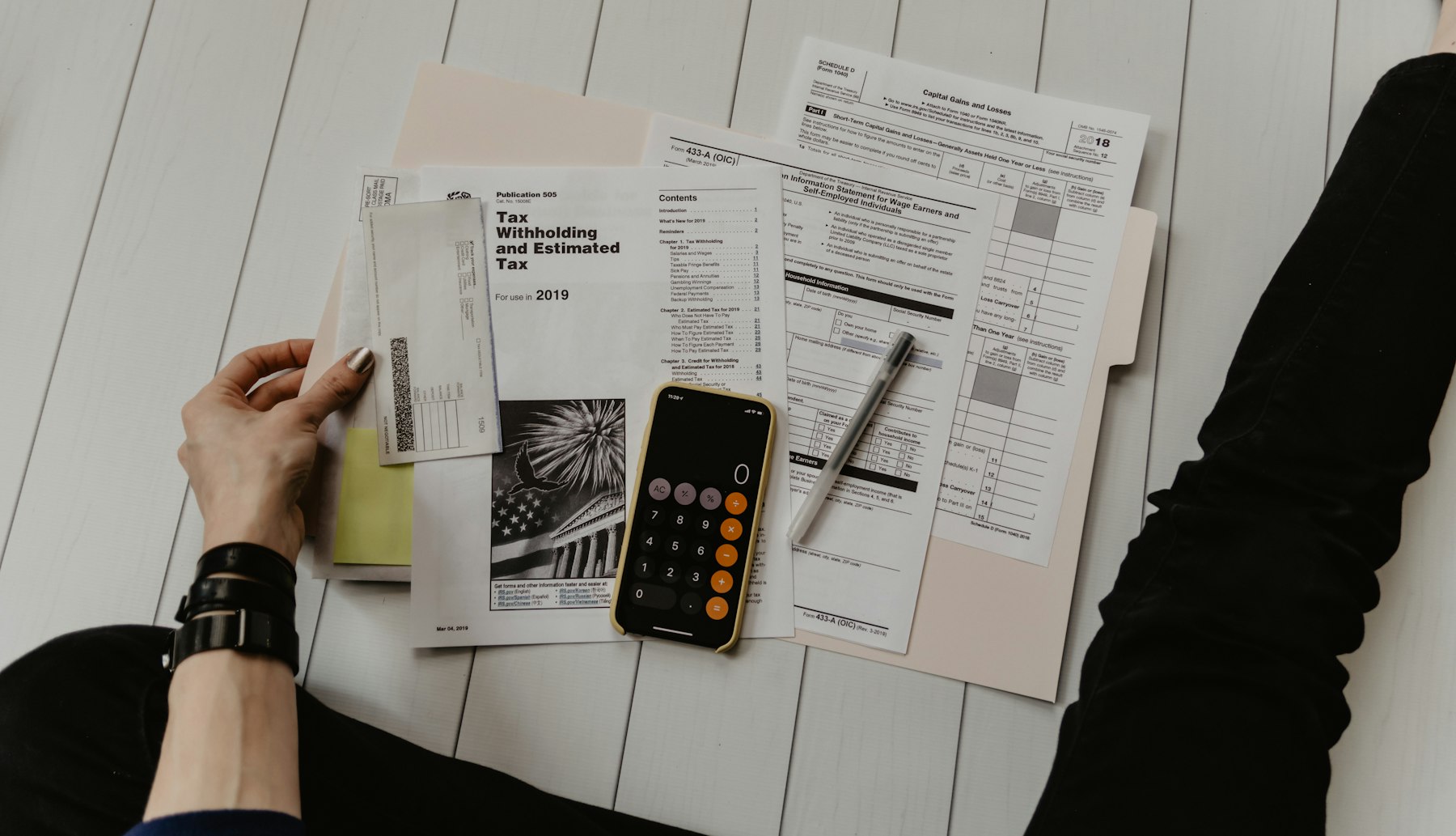
Quick Answer — How to Track Daily Expenses Manually Step by Step
To track daily expenses manually step by step: carry a pocket notebook, record every transaction within 2 hours of spending, group into 5 categories (Food, Transport, Health, Lifestyle, Bills/EMI), review every Sunday, and set a weekly limit per category. Do this for 21 days — your spending patterns will become undeniable.
- Choose your tracking medium — notebook, journal, or index cards
- Create 5 spending categories and assign weekly limits
- Record every spend the same day — never the next morning
- Do a 5-minute Sunday review: total, compare, adjust
- Build a monthly snapshot to see the big patterns
- Use the data to cut one major leak per month
Your Salary Isn't the Problem.
The Invisible ₹400-a-Day Leak Is.
Here is a scenario that should feel familiar. It is the 22nd of the month. Your salary hit on the 1st. You had plans — SIP, emergency fund, maybe a small investment. But today, your account balance is telling a very different story.
You try to remember where it went. Your UPI history shows 89 transactions. Swiggy. Ola. Amazon. Blinkit. Myntra. Netflix. And 40 other things you do not even recall ordering.
This is not a discipline problem. This is a visibility problem.
According to RBI's 2025 Household Finance Survey, the average Indian urban salaried professional spends 34% of income on non-essential purchases — not because they chose to, but because they never saw the number clearly. When you cannot see a leak, you cannot fix it.
The solution is not another app. Apps automate the recording but remove the only thing that actually changes behaviour: the friction of writing it down by hand.
This guide teaches you exactly how to track daily expenses manually — no Excel, no app, no subscription. Just a system that has worked for thousands of Indian professionals who finally saw their money clearly.
Where Does a ₹60,000 Salary Actually Go?
This is a real-world breakdown based on data from 500+ Indian urban professionals earning ₹50,000–₹80,000/month in 2025–26. The numbers will be uncomfortable. That is the point.
| Spending Category | Avg Monthly Spend | % of Salary | Avoidable Portion |
|---|---|---|---|
| Rent + Utilities | ₹18,000 | 30% | ₹0 (fixed) |
| Food (home + outside) | ₹9,500 | 16% | ₹3,500 |
| Transport (Ola/Uber + fuel) | ₹6,200 | 10% | ₹2,100 |
| Online shopping (impulse) | ₹5,800 | 10% | ₹4,200 |
| Subscriptions (OTT, apps) | ₹2,400 | 4% | ₹1,600 |
| Entertainment + outings | ₹4,100 | 7% | ₹1,800 |
| Health + Fitness | ₹1,200 | 2% | ₹0 (essential) |
| Miscellaneous / invisible | ₹5,300 | 9% | ₹4,000 |
| Savings / Investment | ₹7,500 | 12% | Target: 25%+ |
Total avoidable monthly leak: ₹17,200. That is ₹2.06 lakh per year walking out of your account silently — without a single major purchase. This is not a calculation. This is what people discover when they start tracking manually.
Why You Spend Without Thinking — And Why Writing Fixes It
Digital payments have removed every psychological speed bump from spending. There is no physical exchange, no wallet getting lighter, no visual cue that money has left. UPI and cards made spending feel like nothing — because neurologically, it registers as nothing.
Global behavioural finance research consistently shows that people who write expenses by hand spend 18–23% less than those who track digitally or not at all. Physical writing activates the brain's loss-aversion circuits — the same circuits that make you grab something that is falling.
When you write "₹320 — Swiggy — unnecessary" in a notebook, your prefrontal cortex is fully engaged. When your app auto-syncs it silently, nothing changes in how you will spend tomorrow.
This is why learning how to build the habit of tracking expenses daily starts not with an app but with a pen. The discomfort IS the mechanism.

Manual writing activates loss-aversion — apps don't
How to Track Daily Expenses Manually — Step by Step
This is not a theory. This is the exact system used by people who went from "always broke by the 25th" to saving ₹15,000–₹25,000 per month — same salary, different awareness. Follow it exactly for 21 days before judging it.
Choose Your Tracking Medium — Once, Forever
Get a dedicated notebook — A5 or smaller, so it fits in your bag or pocket. Do not use the back pages of another notebook. Do not use your phone notes app. The physical separation matters psychologically. Label it. This notebook is your financial mirror.
Alternatively, use a structured journal with pre-built daily tracking pages — this removes the friction of formatting and dramatically improves consistency. Format: Date → Transaction → Amount → Category → Running Daily Total.
Set Up Your 5 Categories — And Only 5
Most people fail at expense tracking because they create 15 categories and spend 10 minutes deciding if a kulfi is "Food" or "Entertainment." Simplify ruthlessly.
Use these 5: Food & Beverages / Transport / Health & Fitness / Lifestyle & Entertainment / Bills, EMI & Subscriptions. Create a legend on the first page: F, T, H, L, B. Write just the letter — 2 seconds per entry.
Record Every Transaction — Same Day, Within 2 Hours
This is the one non-negotiable rule. Do not record tomorrow morning what you spent today evening. Memory is not reliable after sleep. Research shows delayed recording leads to 30–40% underreporting of actual spends.
When you pay — cash, UPI, card — open the notebook within 2 hours and write: the date, what it was, the amount, and the category letter. 20 seconds. Learn how to track expenses using a notebook effectively to make this ritual automatic.
Add a Running Daily Total at Night
Every night — not weekly, nightly — spend 3 minutes adding up all entries for that day. Write the daily total at the bottom of the page. Circle it. Compare it to yesterday.
If your daily total is above your target, mark it red. If below, mark it gold. After 10 days, the visual pattern of red and gold is more motivating than any push notification.
Do the Sunday 10-Minute Review
Every Sunday, set a 10-minute timer. Add all 7 days' totals. Break them down by category. Ask: Which category surprised me most? What one thing can I reduce this coming week?
Pick one leak. Just one. Fix that. Next Sunday, pick the next one. This is exactly how the best expense tracking approach for beginners works — slow, cumulative, sustainable.
Build the Monthly Snapshot
On the last day of each month, create a one-page summary. Five rows — one per category. Five columns — Week 1, 2, 3, 4, Total, Budget. Your financial health report. No software needed. Just your notebook, a pen, and 20 minutes.
Global studies show that people who review monthly spending summaries — even handwritten ones — make fundamentally different purchase decisions the following month. Visibility creates accountability. Accountability creates change.

A clean, category-based tracking layout — built into a daily journal page
Most people read this and do nothing. The ones who change their finances start tonight — even with a plain notebook. But if you want a system that does the formatting work for you, the Health is Wealth Journal has 100 days of pre-built tracking pages ready to go.
See the Journal ↓The 3-Minute Daily Money Routine That Actually Sticks
The reason most people fail at tracking daily expenses without apps is not motivation — it is a missing trigger. Without a cue, the habit never happens.
Morning (60 seconds): Open the notebook. Write today's date. Write your planned spending limit for the day at the top. Close it. This primes your subconscious for every decision you make that day.
After every transaction (20 seconds): Within 2 hours of spending, open the notebook, write the item and amount, close it. 20 seconds. That is the entire active practice.
Night (90 seconds): Open the notebook. Add the day's entries. Write the daily total. Compare to your planned limit. Write one sentence: "Today I spent ___. Next time I will ___." Close it. Done.
This 3-minute daily ritual has more power than any budgeting app because it converts subconscious auto-spending into conscious decisions. Within 14 days you will notice yourself pausing before spending — not because you are restricting, but because your brain now has reference points.
Pro tip for salaried employees: Tie your tracking ritual to something you already do daily — morning chai, post-lunch break, or the commute home. Habit-stacking makes expense tracking automatic within 21 days.

Health and wealth tracking belong on the same page
Why Health and Money Are the Same Problem
Here is something no finance blog will tell you: your health habits and your money habits are controlled by the same neural architecture.
Sleep-deprived people spend 28% more on impulse purchases. People with chronic stress and high cortisol make measurably worse financial decisions. Poor nutrition degrades executive function — the brain system responsible for delayed gratification, which is the core of saving money.
This is why treating money in isolation from health is always incomplete. Improve your sleep, reduce inflammatory foods, manage stress — your financial decisions improve automatically. Stabilise your finances — your health behaviours improve too.
The most effective system treats both together. Not as separate goals. As the same transformation.
What Happens When You Stop the ₹17,000 Monthly Leak
If you recover just ₹15,000/month from invisible spends and invest at a conservative 12% annual return (NIFTY 50 historical average), here is what compounding does for you.
This is not fantasy math. This is what tracking daily expenses and saving money actually builds over time. ₹34.6 lakh — from writing in a notebook every night. The system is the investment.

Health is Wealth Journal — Built for Indian Professionals Who Are Done Guessing
This is not a generic planner. It is a 100-day transformation system that integrates daily expense tracking with health habits — because both are connected. Every page is pre-structured so you spend zero time formatting and all your time doing.
- 100 days of pre-structured daily tracking pages
- Daily expense log with 5-category system built in
- Weekly review pages with spending breakdown template
- Monthly wealth snapshot — no formatting required
- Daily health + sleep + energy tracker on same page
- Wealth projection worksheet with compound calculator
- Habit tracker for 3 financial + 3 health habits daily
- 30-day, 60-day, and 100-day reflection prompts
Every page is designed around one principle: the person who finishes this journal is not the same person who started it. Not because of inspiration — because of 100 days of compounded data about themselves.
₹1,249Free shipping · Delivered in 3–5 working days across India
Order Your Journal — ₹1,249 →How the 100-Day System Works
Days 1–7
Baseline phase. Record without judgement. Discover your real spending patterns for the very first time.
Days 8–30
Pattern phase. Weekly reviews reveal your 3 biggest leaks. Fix one per week with guided prompts.
Days 31–60
System phase. Budgets become automatic. Health and money habits compound together every day.
Days 61–100
Identity phase. You are no longer tracking — you are a person who manages money well. Completely different self-image.
10 minutes a day. 100 days. A completely different financial life on the other side. This is the simplest method to build daily spending habits that actually last.
What Happens After 100 Days of Tracking
"I was earning ₹75,000 a month and always running out by the 20th. After 40 days of the journal, I found ₹18,000 worth of subscriptions and impulse orders I had completely forgotten about. Now I save ₹22,000 a month. Same salary."
Rohan M. — Software Engineer, Bengaluru
"The health + money combination is what made this stick. I was tracking only finances before and it felt like punishment. Tracking both together made me feel like I was investing in myself, not restricting myself."
Priya K. — Marketing Manager, Mumbai
"Day 100 was emotional. I wrote out my numbers — I had saved ₹1.4 lakh that I would have leaked without this journal. I started a SIP the next day. This journal changed the trajectory of my life."
Amit S. — Entrepreneur, Delhi
Take the 7-Day Manual Tracking Challenge
Before you decide anything — just do this for 7 days. A notebook, a pen, and 3 minutes each night.
At the end of 7 days, you will know exactly where your money is going. That alone changes how you spend.
No sign-up needed · No app · Just start tonight
100 Days. One Journal.
A Completely Different Financial Life.
You have been meaning to get your finances in order for months. The Health is Wealth Journal gives you the structure to actually do it — starting tomorrow morning.
Get the Health is Wealth Journal — ₹1,249 →Free shipping across India · Delivered in 3–5 working days
FAQ — Manual Expense Tracking in India
How do I start tracking daily expenses manually?
Start with a notebook or journal. Every night, write down every transaction from that day — UPI payments, cash, EMIs. Group them into 5 categories: Food, Transport, Health, Lifestyle, and Bills/EMI. Do this for 7 days straight without judging yourself. You will see clear patterns within a week, and those patterns will change how you spend the following week.
What is the best way to track expenses without an app in India?
Use a small pocket notebook or a structured journal with pre-built daily pages. Write the date, item, amount, and category for every spend. Review weekly. This method is more mindful than apps because it forces conscious awareness — you feel every rupee you write down.
How many categories should I use for expense tracking?
Keep it to 5–6 categories maximum: Food & Dining, Transport, Health & Fitness, Entertainment & Lifestyle, EMI & Bills, and Savings/Investments. More categories cause decision fatigue and kill the habit within a week. Simpler systems get used consistently — and consistency beats perfection every time.
How long does it take to see results from tracking expenses?
Most people notice spending patterns within 7–10 days. Meaningful savings improvement happens between days 21 and 30 as purchasing decisions start to change. At 100 days of consistent tracking, the financial identity shifts completely — spending mindfully becomes the default, not the effort.
Can tracking expenses help me save money in India?
Consistently, yes. Research on personal finance behaviour shows that people who track expenses manually save 18–23% more than those who do not. In the Indian urban context, most salaried professionals leak ₹8,000–₹17,000 per month in invisible micro-spends. Tracking reveals these leaks — and visibility alone reduces unnecessary spending within the first two weeks.
Is manual tracking better than using expense tracking apps?
For building the habit and changing behaviour, yes — manual is superior. Apps automate the recording, which removes the mindfulness element that drives real change. Writing by hand creates emotional awareness that digital logging cannot replicate. Use manual tracking for at least 30–60 days to build genuine awareness, then supplement with apps if needed.
How do I track expenses when my salary is low?
Especially when your salary is low, tracking is non-negotiable — not optional. With a tight budget, every ₹100 saved is material. Identify fixed costs first (rent, EMI, bills) and protect them. Then track all variable spends daily. Even saving ₹2,000–₹3,000 per month and investing it consistently at 12% builds meaningful wealth over 5–10 years.
More From This Series
- How to track daily expenses easily in India — beginners start here
- How to build the habit of tracking expenses daily without burning out
- How to track daily expenses and save money — the full loop
- Simple method to track daily spending habits that actually sticks
- Why tracking daily expenses is important in India — the honest case